The Art of Patience: Inside a Lacquer Workshop Outside Hanoi
Forty minutes outside Hanoi, the pace of the city begins to fall away.
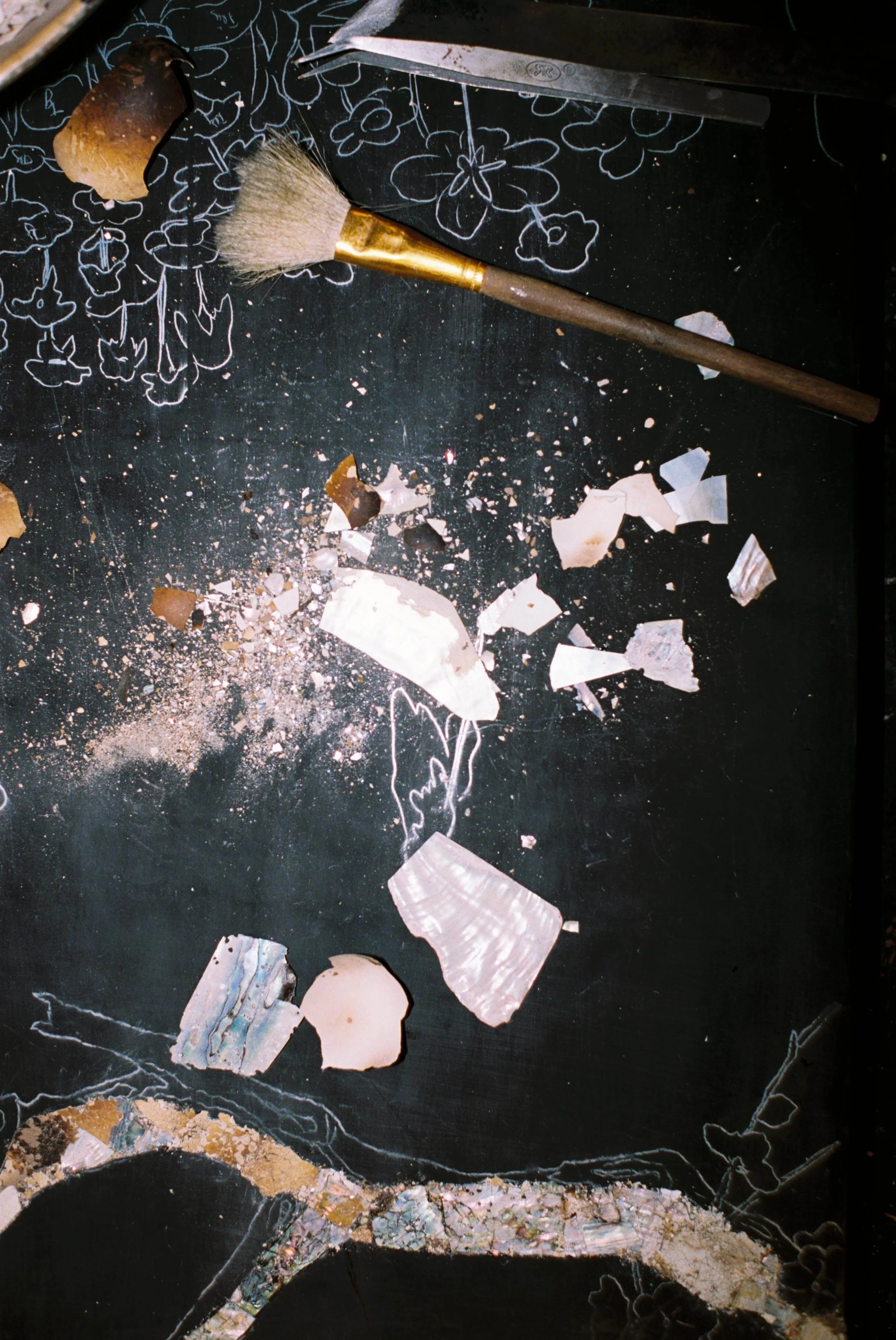
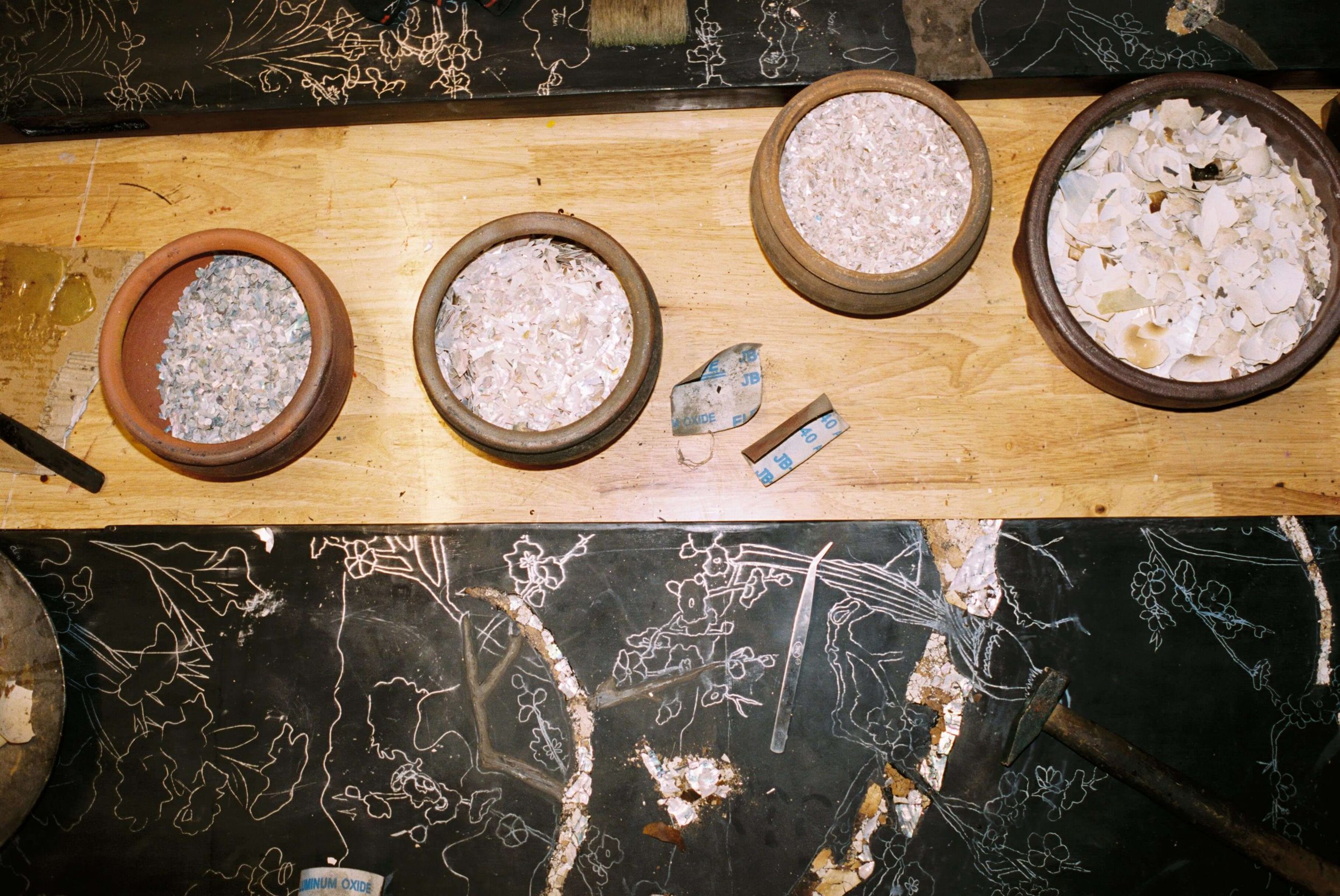
Inside a traditional lacquer workshop, trays of nacre, or mother of pearl, sit beside fragments of eggshell. Half-finished artworks lean against walls. Tools rest on workbenches waiting for the next pair of hands. Nothing feels staged for visitors. Instead, the workshop feels alive, as though work has simply paused for the evening and will resume again tomorrow.
There is dust in the air from hours of sanding. A faint smoky scent lingers from the process of toasting eggshells before they are cracked and prepared for inlay. The atmosphere is remarkably still.
Vietnamese lacquer art, known as sơn mài, is one of the country's most distinctive artistic traditions. Developed from centuries-old lacquer techniques and refined during the 20th century by Vietnamese artists, it combines natural lacquer with materials such as gold leaf, silver, eggshell and nacre. The result is artwork that is not simply painted, but built through layers, revealing depth, texture and light that cannot be achieved through paint alone.
In this workshop, every piece begins with a sketch drawn onto wood. Artisans carve into the surface before carefully placing fragments of nacre and eggshell into the design. Nacre provides an iridescent shimmer that shifts with the light, while eggshell creates delicate whites and subtle textures. Together, they have become hallmarks of Vietnamese lacquer art.
The workshop's founder first learned the craft herself before building a business around it. Today, the studio continues to produce commissioned works using techniques that remain largely unchanged. Portraits, decorative panels and large-scale artworks are still created by hand, one fragment at a time.
What makes the process remarkable is that much of the work remains hidden until the very end. Layers of lacquer are applied over the inlaid shell before the surface is sanded and polished. Only then does the image gradually emerge.
Perhaps that is why the workshop feels so different from the world outside. Hanoi is a city moving at extraordinary speed. Here, progress is measured differently. In hours spent carving. In layers of lacquer. In fragments of shell carefully placed by hand.
Among the scent of smoke, the fine dust of sanding and the unfinished works waiting to be continued the next day, the workshop offers a glimpse into a tradition that values patience above all else.
In a rapidly changing Vietnam, that may be its most enduring lesson.